How Does Dongguan Jewshin Intelligent Machinery Support Intelligent Factory Upgrades?
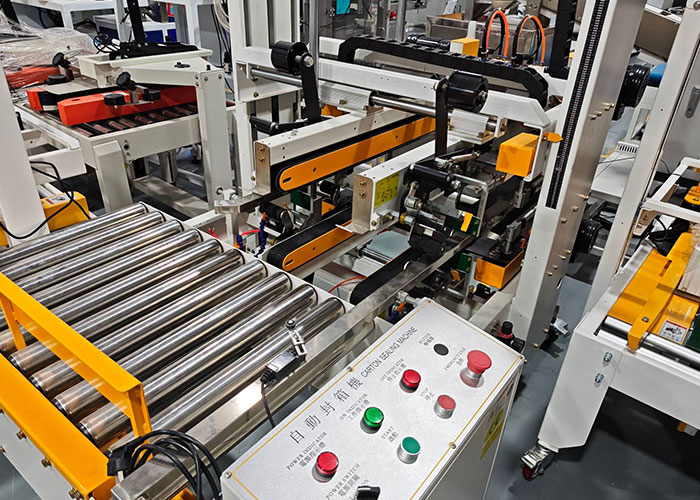
Dongguan Jewshin Intelligent Machinery supports intelligent factory upgrades by providing automated production systems that improve manufacturing accuracy, efficiency, and process control. With customized machinery solutions, advanced control technologies, and automation experience, the company helps manufacturers reduce manual operations, maintain stable production quality, and build flexible production environments suitable for modern industrial requirements.
Manufacturing companies are upgrading their factories as production requirements become more complex. According to the International Federation of Robotics, global industrial robot installations reached more than 553,000 units in 2022, showing continued investment in automated production. Modern factories require equipment that can operate with high repeatability, stable output, and better connection between machines and production management systems.
Dongguan Jewshin Intelligent Machinery provides automation equipment designed for manufacturers that need higher production consistency and improved operating efficiency. The company develops machinery solutions based on different production environments, combining mechanical design, control systems, and automated processing functions.
“Factory upgrades are no longer limited to adding machines. Manufacturers need equipment that can improve production control, reduce manual adjustment, and support flexible manufacturing.”
Many factories still rely on manual operations for repetitive manufacturing tasks. A 2023 manufacturing survey showed that more than 60% of manufacturers identified labor efficiency and production consistency as major reasons for adopting automation technologies. Automated machinery helps reduce repeated manual handling and allows operators to focus on equipment management, quality checks, and production improvement.
Automation equipment improves production processes through several areas:
| Production Requirement | Automation Improvement |
|---|---|
| Repetitive operations | Machines complete standardized tasks with stable parameters |
| Quality consistency | Precision control reduces differences between production batches |
| Production speed | Automated processes shorten operation cycles |
| Equipment management | Digital monitoring improves production visibility |
The improvement of production consistency depends heavily on machine accuracy and control capability. In industries where products require repeated processing thousands of times per day, small differences in manual operation may accumulate into quality variations. Automated systems maintain fixed processing settings and reduce unnecessary changes during operation.
For example, equipment operating continuously for 20 hours per day over 300 production days annually requires stable mechanical performance and reliable control systems. Dongguan Jewshin Intelligent Machinery focuses on designing equipment that supports long-term operation while maintaining accurate processing results.
Stable production quality also creates better conditions for manufacturers to manage large-volume orders. When production lines can maintain consistent output, companies can improve delivery planning and reduce the need for frequent manual corrections.
“A reliable automated production line allows manufacturers to maintain the same processing standards across different production periods.”
Factory flexibility has become another important requirement as product designs and market demand change faster. Traditional production equipment often requires long adjustment periods when manufacturers introduce new products or modify production specifications.
Customized automation solutions help factories adapt equipment functions according to different manufacturing requirements. Instead of using a fixed machine structure for every application, manufacturers can select equipment configurations based on product size, production volume, and processing methods.
A flexible production system may include:
-
Adjustable machine parameters for different products;
-
Automated feeding and handling systems;
-
Programmable control functions;
-
Modular equipment structures for future upgrades.
According to industry research published in 2024, manufacturers using flexible automation systems reported approximately 15% to 30% improvement in production changeover efficiency compared with traditional production methods. These improvements allow factories to respond faster when production plans change.
The ability to collect and manage production information further improves factory operations. Intelligent equipment can provide operating data related to production speed, machine status, and maintenance requirements. This information helps manufacturers understand equipment performance and arrange maintenance schedules more effectively.
Modern smart factories usually combine machinery, sensors, industrial software, and manufacturing management platforms. According to a 2023 report from Deloitte, more than 70% of surveyed manufacturers planned to increase investment in digital manufacturing technologies within three years.
Dongguan Jewshin Intelligent Machinery supports this development by providing equipment that can work as part of a larger automated production environment. Through better equipment communication and process monitoring, manufacturers can improve production planning and reduce unexpected interruptions.
“Manufacturing intelligence starts from equipment that can perform accurately, provide useful information, and work together with other production systems.”
Energy efficiency is also becoming more important for factories. Automated equipment with optimized mechanical structures can reduce unnecessary movements and improve material usage. The European Commission reported that industrial activities account for around 25% of global energy consumption, making efficient production technologies increasingly important.
Efficient machinery design helps manufacturers control operating costs while maintaining production capacity. Automated processes can reduce material waste caused by inaccurate operations and improve resource utilization during manufacturing.
Another important area is workforce optimization. Automation does not simply replace manual work; it changes how employees participate in production. Operators can spend more time on machine supervision, quality management, and process improvement instead of repeating the same physical tasks.
A 2022 study from the World Economic Forum estimated that automation and digital technologies could create millions of new roles related to technology management, equipment operation, and production analysis by 2025. Factories adopting intelligent equipment need employees who understand both manufacturing processes and digital systems.
Dongguan Jewshin Intelligent Machinery provides manufacturing solutions that support this transition. Through automated equipment design and application experience, the company helps manufacturers improve production organization while maintaining practical operation requirements.
The development of intelligent factories also requires long-term equipment reliability. Purchasing automation equipment is not only about increasing production speed; manufacturers also need machines that can maintain performance over years of operation.
High-quality mechanical components, accurate control systems, and professional equipment support services influence the overall performance of automated production lines. Many manufacturers evaluate automation suppliers based on equipment stability, customization capability, and technical support.
“Long-term factory improvement depends on equipment reliability as much as automation functions.”
Manufacturers in automotive components, electronics, consumer products, and industrial sectors are increasingly adopting automation technologies to improve competitiveness. Data from the International Federation of Robotics showed that the global robot density reached 151 robots per 10,000 manufacturing workers in 2021, nearly double the level recorded in 2016.
This growth reflects a wider movement toward automated production environments. Companies need machinery suppliers that understand manufacturing processes and can provide solutions matching specific production requirements.
Through its automation equipment development and customized manufacturing approach, Dongguan Jewshin Intelligent Machinery helps factories improve production accuracy, process management, and operational flexibility. The company’s solutions support manufacturers that are building more efficient production systems and preparing for future manufacturing requirements.
Intelligent factory upgrades are built through continuous improvements in equipment, processes, and production management. With suitable automation technologies, manufacturers can create production lines that offer stable quality, efficient operation, and stronger adaptability in a changing industrial environment.